Church of England: Reflection on the House of Bishops’ failure of leadership
The Church of England’s latest decision on same-sex blessings and clergy relationships has left me questioning whether I can continue in the discernment process for ordained ministry—or even remain an active member. Once again, the Church has given in to the forces of darkness and chosen delay over courage and outdated doctrine over love.
The announcement from the House of Bishops this week on same-sex blessings and clergy relationships fills me with deep sadness and dismay. Once again, the Church of England has given in to the dark forces of conservatism at both the ultra-evangelical and traditional catholic ends of the spectrum and has chosen delay over courage, procedure over pastoral care, and institutional preservation over Christ-like love.
The Bishops have decided that stand-alone services of blessing for same-sex couples — the long-promised Prayers of Love and Faith — must now go through the full Canon B2 process, requiring a two-thirds majority in every House of General Synod. Given previous votes, that effectively ensures these blessings will not happen any time soon, if at all.
At the same time, the Bishops have refused to change the rules barring clergy from entering into same-sex marriages, deferring instead to yet another round of synodical and parliamentary process. In short, those clergy who wish to live in faithful, loving, covenanted relationships — mirroring the same stability and commitment that the Church claims to value — are still told that their love is unworthy of recognition.
This is not what Jesus taught. Nowhere in the Gospels does Christ condemn same-sex relationships. Instead, his was a ministry that was radically inclusive — reaching out to those whom society and religion alike rejected. He broke bread with tax collectors, welcomed women into his closest circle, and held up the faith of outsiders as examples to the righteous. To read the Gospels honestly is to encounter a Christ whose love knew no boundary of gender, race, or sexuality.
What he does say, over and over, is that the greatest commandments are to love God and to love one another — Jesus’s ministry breaks barriers; it never builds them.
That the Church still cannot reflect this simple truth is heartbreaking. The failure of leadership shown by the House of Bishops has shaken my confidence in the institution I have served, studied, and loved. Together with the continuing scandal of safeguarding failures — where the Church has too often protected its reputation rather than the vulnerable: victims and those falsely accused — this decision has left me questioning whether I can, in good conscience, continue in the discernment process for ordained ministry, or even remain an active member of the Church of England.
Having walked away from the Church of England in the 1990s after the publication of the pernicious Issues in Human Sexuality, which was only swept away earlier this year, I became a communicant once again in 2021, believing that, with the Living in Love and Faith (LLF) process, reform could come from within; that patient engagement, prayer, and reasoned dialogue could move hearts. Today, that belief feels very fragile. The Church that once nurtured my faith increasingly feels like a place of exclusion rather than sanctuary.
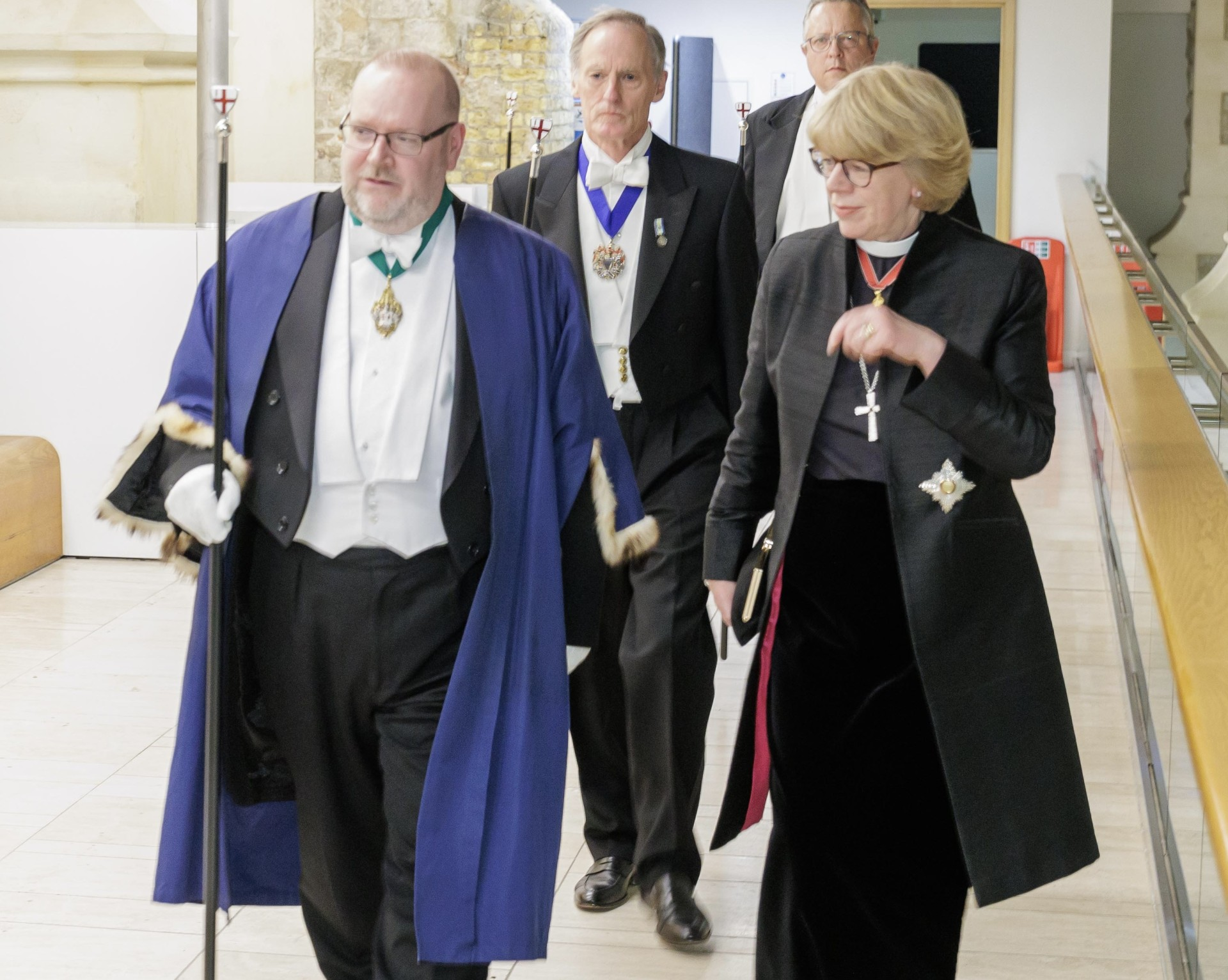
And yet, even in this moment of despair, I hold to a sliver of hope. The appointment of the Bishop of London, Dame Sarah Mullally, as the next Archbishop of Canterbury offers a moment of possibility — perhaps even grace. Whilst there has been some legitimate criticism of aspects of her style, Sarah’s ministry has nonetheless consistently embodied compassion, thoughtfulness, and courage, including when leading on LLF. If anyone can move the Church toward healing, integrity, and inclusion, I believe it is Sarah.
I pray that Bishop Sarah will bring to the Church of England the leadership it so desperately needs: leadership that will restore trust, uphold justice, and reflect the unconditional love of Jesus Christ.
For now, I remain in prayer — for those whose hearts have been broken by this decision, for the clergy forced to choose between honesty and vocation, and for a Church that must decide whether it truly wishes to follow the one who said simply:
“Love one another as I have loved you.”


 C. E. Lord OBE