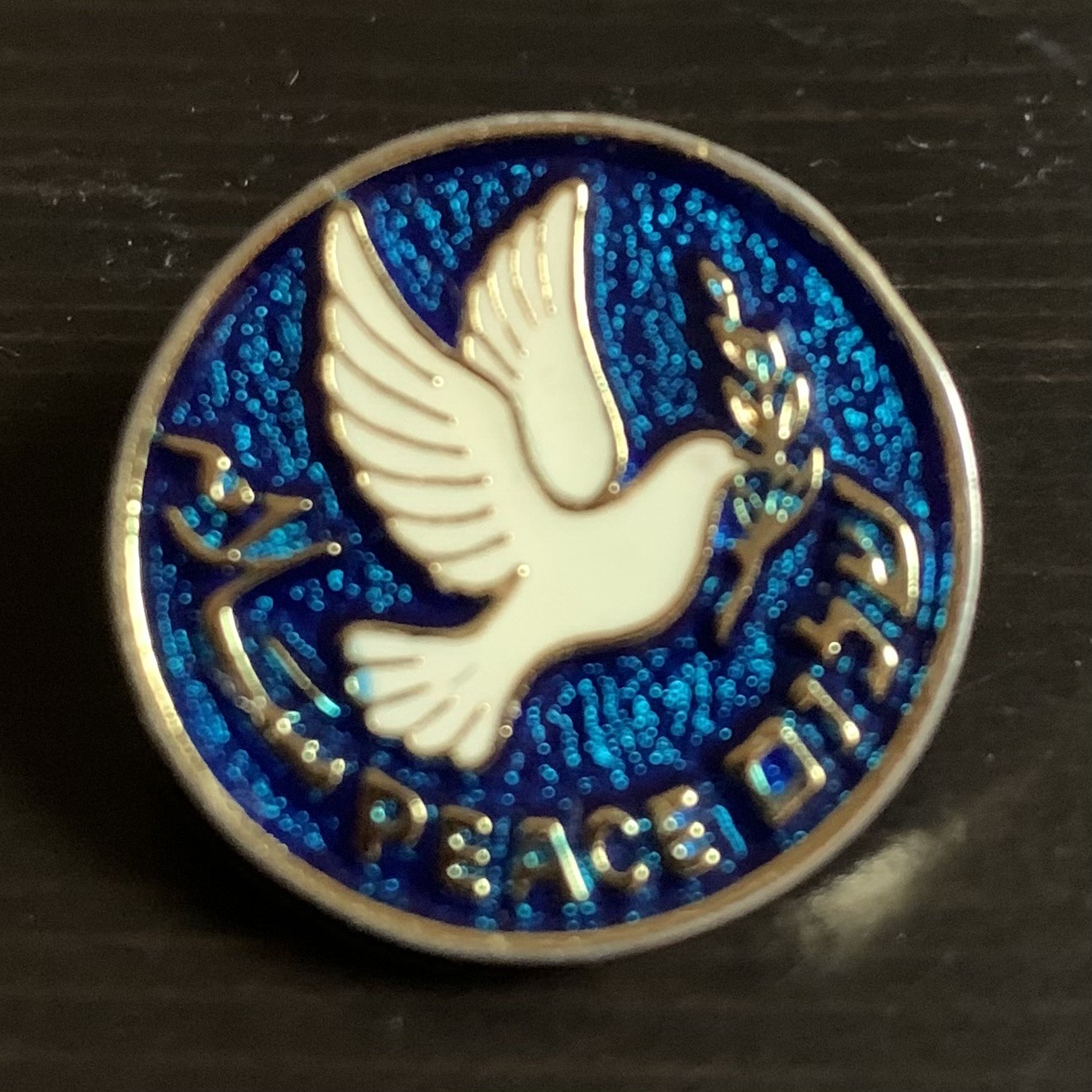
The attack on Australia’s Jewish community on Bondi Beach in recent days has left me shaken and heartsick. It joins a grim list of assaults on Jewish life across the world, including the attack on the Heaton Park synagogue in Manchester on Yom Kippur earlier this year. These are not isolated acts. They sit within a wider, darkening atmosphere in which Jewish communities are once again being made to feel unsafe, visible, targeted.
I have been struggling deeply with all of this for nearly two years now. Ever since the unspeakable atrocity carried out by Hamas in Israel on 7 October 2023, the world has seemed to tilt further off its moral axis. What followed, the Israeli government’s extreme and utterly disproportionate response in Gaza, has compounded the horror. Tens of thousands of Palestinian lives have been lost. Whole communities have been devastated. I believe without hesitation that Netanyahu and his regime bear grave responsibility for policies and actions that meet the definition of genocidal violence. Holding that truth does not dilute the evil of Hamas’s crimes. It simply insists that moral clarity must apply to all.
My anguish is not abstract. It is personal, rooted in a lifetime of relationships and commitments that refuse to be simplified.
From my schooldays onwards, many of my closest friendships have been with Jewish friends and their allies. At the University of Essex, when the Students’ Union adopted a crude and frankly antisemitic position on Israel and Palestine, I worked to replace it with a principled commitment to a two state solution that recognised both Jewish and Palestinian rights to self determination. Through my work in and beyond the National Union of Students, I collaborated closely with the Union of Jewish Students, building alliances that were sometimes fragile but always grounded in mutual respect.
In my twenties, I explored Judaism seriously as an alternative route to God. That exploration was not a dalliance. It was undertaken with care, reverence, and love. Alongside that spiritual searching, I worked with the British Friends of the Hebrew University, volunteered with the Anglo Israel Association, and supported the New Israel Fund, precisely because all three represented a vision of Israel rooted in democracy, human rights, and coexistence rather than ethno-nationalism.
At the same time, some of my closest friendships have also been with British Muslims and supporters of Palestinian rights. I have long supported Palestinian self determination and have been outspoken in my opposition to Israel’s occupation of Gaza and the West Bank. The suffering of Palestinian people is real, enduring, and intolerable. Over the past two years I have joined national marches in London calling for a ceasefire and for a just peace. I am a member of Christians for Palestine, Liberal Democrat Friends of Palestine, and also Liberal Democrat Friends of Israel, because I refuse the lie that one must choose only one people to love.
What frightens me deeply is the way in which legitimate advocacy for Palestinian rights is sometimes used as a cover for something far darker. Antisemitism has found new disguises. It appears on the far right, as it always has. It also appears on parts of the left, cloaked in anti Zionist language that slips too easily into hatred of Jewish people themselves. I am especially disturbed by some Christians who attach a theological justification to their hostility towards Jews, as if centuries of Christian antisemitism had taught us nothing.
Chants such as “from the river to the sea” may be heard by some as a call for justice, but they are heard by many Jewish people as a call for erasure. We cannot ignore that reality. To wish for Palestinian freedom must never mean wishing for the destruction of Israel or denying Jewish people the right to safety, sovereignty, and belonging.
There is a long and tragic truth here. Both Jewish people and Palestinians have, in different ways and at different times, been treated as unwanted nomads, pushed from place to place, used as pawns by empires, nations, and ideologies far larger than themselves. That shared history of displacement should have bound them together in compassion. Instead, it has been exploited to keep them apart.
My prayer remains stubbornly unfashionable. Two states. Side by side. In peace. Neither people erased. Neither reduced to a proxy for regional or global power struggles. Neither required to deny the humanity of the other in order to survive.
In the meantime, we must be absolutely clear. Antisemitism must be confronted wherever it appears, on the right and on the left, in Britain and across the world. Anti Muslim hatred must also be named and resisted with equal seriousness. Safety, dignity, and belonging are not finite resources.
As a Christian, I end where I must always end, not with ideology but with the gospel. Jesus offers no clever escape from moral responsibility. He offers only a command that is both simple and devastating in its implications:
“You shall love the Lord your God with all your heart, and with all your soul, and with all your mind. This is the greatest and first commandment. And a second is like it: You shall love your neighbour as yourself.”
In a world burning with fear and fury, loving our neighbour may be the hardest work we are called to do. It is also the only work that can possibly save us.


 C. E. Lord OBE