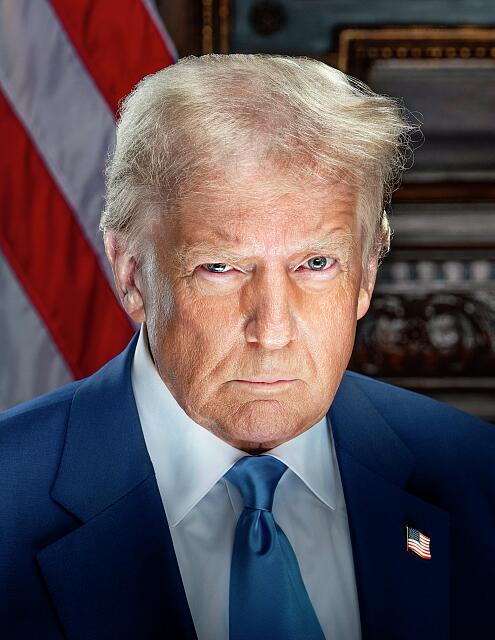
Trump’s authoritarian populism risks turning the U.S. into a fascist state which is why I no longer feel safe to travel there, and why others, including global sport, should question their own plans.
I have long been proud to celebrate the United States as a beacon of democratic pluralism, creativity, and cultural diversity. I have friends, colleagues, and communities there whom I love and deeply respect. But today I find myself confronting a stark and painful truth: I can no longer, in good conscience, travel to the United States while the current administration continues down a path that feels increasingly authoritarian, exclusionary, and violent.
What we are witnessing in the United States right now is not a political disagreement or a passing moment of instability. It feels like a deliberate, accelerating project to reshape the nation’s political culture and its relationship to power. The question that many of us abroad now have to ask is whether the United States — under President Donald J. Trump — risks becoming a fascist state. Personally, I fear the answer is frighteningly close.
Authoritarian populism wrapped in Nationalism
Trump’s rhetoric and governing style are defined by an obsessive focus on loyalty, personality cult, and personal brand over institutions, constitutional restraint, or democratic norms. Renaming major cultural institutions such as the Kennedy Center after himself is not a trivial act of vanity. It is a signal that the state itself is being reshaped around the image and authority of a single leader. That is a classic hallmark of authoritarian systems, where national identity is collapsed into the will and ego of one man.
But this cult of personality is not just symbolic. It is being enforced through policy and through power. Trump has built his political project on identifying enemies within. Immigrants, or simply people who look as though they might be immigrants, are treated as inherently suspect. Federal agencies are encouraged to profile, detain, and intimidate on the basis of appearance and origin. That is not border control. It is ethnic and cultural scapegoating.
LGBTQ+ people have also been placed squarely in the firing line. Trans people in particular have been singled out for exclusion from sport, education, healthcare, and public life. Federal rhetoric and executive action frame queer existence as a threat to children, to families, and to the nation. This is not the language of democratic pluralism. It is the language of moral panic and authoritarian control.
At the same time, Trump has waged an ideological war on knowledge itself. Universities have been threatened with funding cuts for failing to conform to political orthodoxy. Schools and libraries are under pressure to remove books that deal with race, gender, sexuality, or America’s own history of injustice. Academic freedom and intellectual inquiry are treated as subversive rather than essential to a free society. When a government starts policing what can be taught, read, and debated, it has already begun to abandon democracy.
Democratic processes are also under sustained attack. Trump and his allies continue to undermine trust in elections, casting doubt on results they do not like while seeking to entrench their own power through aggressive gerrymandering, voter suppression, and partisan control of electoral machinery. This is not how confident democracies behave. It is how regimes behave when they fear the people.
Taken together, these are not isolated controversies. They form a coherent pattern. Loyalty is rewarded. Dissent is punished. Minorities are scapegoated. Institutions are hollowed out. Truth is treated as negotiable. That is not conservative politics. It is authoritarian populism, and it is profoundly dangerous.
The weaponization of Federal force against civilians
Perhaps the most disturbing element of the past week has been the role of federal enforcement agencies in escalating violence against American civilians. Immigration and Customs Enforcement (ICE) and Customs and Border Patrol (CBP) — institutions that should exist to enforce laws with professional restraint — are now acting with alarming impunity.
In Minneapolis on 7 January 2026, an ICE agent shot and killed a 37-year-old woman, Renee Nicole Good. The administration immediately rushed to label her a “domestic terrorist” and to frame the deadly encounter as an act of self-defense. But video footage and statements from local officials tell a far different story, one in which a woman was shot while left unarmed and without clear threat to officers. Local leaders, including Minneapolis Mayor Jacob Frey, have blasted Federal narratives about the incident as “bullshit” and demanded ICE leave the city.
A day later, federal agents shot and wounded two people in Portland, Oregon, during what was described as a “targeted vehicle stop” by Border Patrol agents. Portland’s mayor and local legislators condemned the incident and called for federal immigration agents to withdraw, saying their presence erodes constitutional protections and brings violence into communities.
This isn’t law enforcement. This is state violence. The increasing politicization of ICE – aligned closely with Trump’s ideological goals and using lethal force – resembles unchecked militia more than accountable policing. To many observers, it feels dangerously comparable to the early stages of historical authoritarian regimes, where internal security forces become tools of political objectives rather than protectors of the public.
A climate of surveillance and silencing
From a purely personal perspective I know that I would not be safe visiting the United States. I am queer. I speak critically about power structures, about human rights, about the creeping authoritarianism I see not just in the United States but globally. I will not travel to a country where my social media could be searched on or before my arrival, where my speech and views could be interrogated, restricted, or weaponised against me simply for questioning the political direction of its leaders.
The right to free speech and the right to dissent should not be privileges enjoyed only by the powerful. If passing through U.S. immigration means surrendering private digital spaces or facing judgment for my identity and political views, I refuse to put myself at risk.
Trump’s broader foreign policy approach
Trump’s foreign policy only deepens these concerns. His administration’s approach to global institutions has been to withdraw, delay, defund, or dismiss them outright. Meanwhile, his foreign alliances raise uncomfortable questions about where the United States’ moral compass now points. Close alignment with regimes accused of human rights violations — whether in Israel’s current government or other authoritarian leaders — coupled with weak support for democratic leadership in Ukraine in its fight against Russian aggression, suggests a realignment away from universal rights and toward transactional power politics.
The Trump administration’s own recent military intervention in Venezuela is not a defensible action of a stable democratic superpower. It is an act of illegal aggression and a profound violation of both international law and the United States’ own constitutional obligations. The U.S. cross-border military operation in Caracas on 3 January, that resulted in the capture and forcible removal of Venezuelan President Nicolás Maduro and his wife to New York on criminal charges, was correctly condemned as a violation of the United Nations Charter. The UN prohibits the threat or use of force against the territorial integrity and political independence of another sovereign state without Security Council authorisation or an armed attack in self-defence. The U.S. operation did not meet either condition, undermining the international order which the United States once helped to uphold.
The scale of the violence makes the legal breach all the more severe. Dozens of Venezuelan security personnel and civilians were reported killed in the strikes that facilitated Maduro’s capture. Even after this operation, President Trump has publicly declared that he does “not need international law” to justify further action and has suggested long-term control over Venezuelan resources and geopolitical direction. Such rhetoric runs counter to the rule of law and sets a dangerous precedent of might over right.
It is also clear that the strategic aim of this intervention is not limited to alleged criminal charges. The United States is now asserting control over Venezuela’s vast oil industry, signalling a desire to secure and monetise those resources for U.S. businesses, especially its major petrochemical interests. The attempt to reframe regime change as a law enforcement action does not alter the stark reality: forcing regime change by military means and attempting to control another country’s sovereign resources contravenes the fundamental principles of sovereignty, self-determination, and the Supremacy Clause of U.S. constitutional law, which binds the United States to treaty obligations it has ratified.
Similarly, the administration’s renewed threats toward Greenland reflect a reckless imperialism that should alarm the international community. Greenland is a sovereign territory of the Kingdom of Denmark, a close ally of the United States and a member of NATO. Any suggestion that the United States might lay claim to, annex, or otherwise exert control over Greenland’s territory or resources is an attack on the principles of sovereignty and alliance that have underpinned Western security since the Second World War. I stand unequivocally with Greenland and Denmark. The United Kingdom along with Canada, and the European Union must defend Greenland’s right to self-determination and territorial integrity. No amount of geopolitical grandstanding or resource-driven rhetoric should ever justify pressure, interference, or aggression against a peaceful, democratic people.
These actions and threats go well beyond routine foreign policy. They are coercive assertions of power that erode the legitimacy of international law and the norms that protect smaller states from the predations of larger ones. They confirm, to me, that the United States under Trump is increasingly comfortable with coercion over cooperation, with force over diplomacy, and with unilateral action over the multilateral consensus that has preserved relative global peace for decades.
Why FIFA and the IOC must reflect
We cannot separate politics from sport when the political environment directly affects human rights, safety, and dignity. World governing bodies like FIFA and the IOC must ask themselves whether it is appropriate to confer prestige on a nation whose leadership actively undermines democratic norms, tolerates violence against civilians, and fosters a culture of exclusion.
International sport has always stood – at least in theory – for diversity, unity, fairness, and peace. Hosting global events in a nation appearing to drift toward authoritarian populism without accountability risks legitimising that drift. This is why sport governing bodies should consistently apply the lens of human rights to determining where their events should take place and who should participate, making the concept of the Olympic truce – building a peaceful and better world through sport and the Olympic ideal – a reality.
A final thought
The position I have taken in this article is not partisan rhetoric. It is a moral judgement grounded in recent events, in policy direction, and in lived reality. The United States is at a crossroads. What it chooses now – whether to embrace democratic pluralism or to inch toward autocracy under the guise of nationalism – will shape not only its own future but the moral contours of global order.
Until there is accountability for abuses of power, a restoration of protections for dissent, and a reaffirmation of the values upon which stable democracies are built, I cannot – in all conscience – step foot on U.S. soil. I hope the world’s sporting bodies will sit with that deeply uncomfortable question before continuing to offer their greatest stages to a country at such a political inflection point.
Photo credit: Daniel Torok, Library of Congress


 C. E. Lord OBE