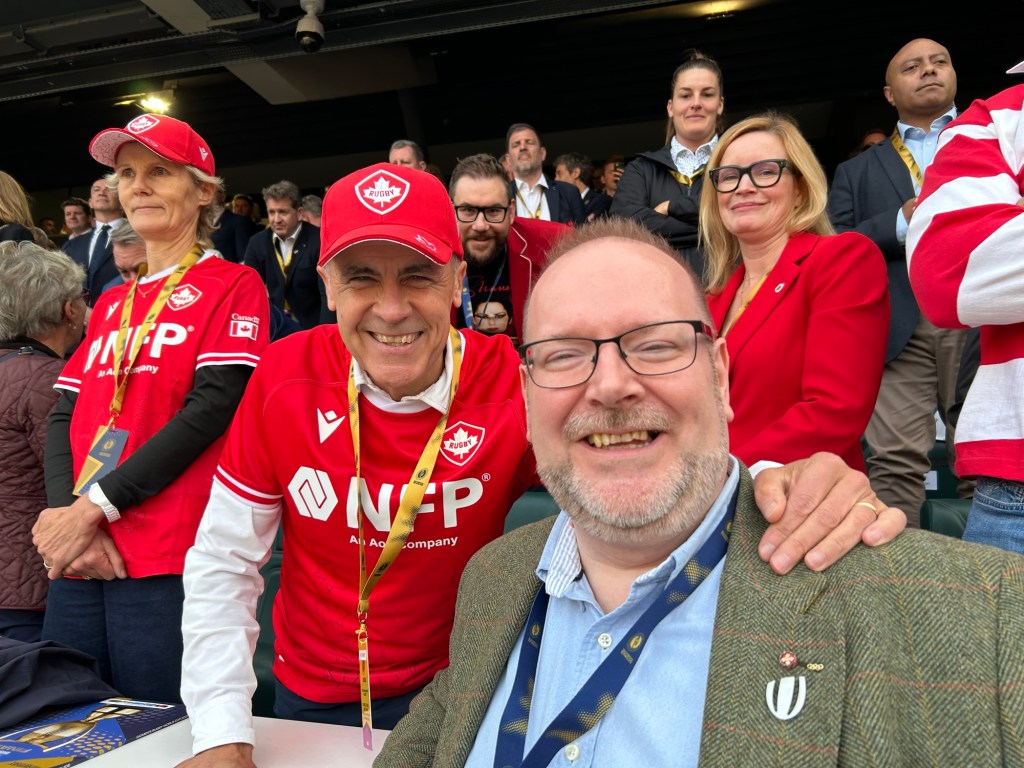
At the World Economic Forum in Davos, Canadian Premier Mark Carney delivered one of the most important speeches of this decade. It deserves to be read not as a Canadian intervention alone, but as a blueprint for every serious democracy that refuses to drift into vassalage in a world of unrestrained power politics.
Carney named the moment with rare clarity. In a clear reference to Trump’s aggressive posture on trade and territory, the rules based international order is not in transition. It is ruptured. Pretending otherwise is not realism. It is self deception. The comfortable rituals we repeated for decades no longer protect us. Worse, they make us complicit in our own weakening.
Carney’s invocation of Václav Havel was not rhetorical flourish. It was a warning. When countries keep putting the sign in the window, mouthing platitudes about rules that no longer bind the powerful, they help sustain the very coercion they claim to oppose. Living within the lie is easier than living in truth. It is also fatal.
Canada shows what living in truth looks like
Canada’s response is not isolationism or nostalgia. It is values based realism. Build strength at home. Diversify abroad. Act with partners who share enough interests and values to move together. Reduce vulnerability to coercion so that principled foreign policy becomes possible rather than performative.
This is not abstract theory. Canada is backing its words with action. Defence investment. Strategic autonomy in energy, minerals and AI. New trade and security partnerships across continents. A dense web of alliances rather than dependence on a single hegemon.
This is exactly the kind of leadership one expects from someone who proved, as Governor of the Bank of England, that calm authority, moral seriousness and technical competence can coexist. Carney understands markets, power and institutions. He also understands when stories stop being true.
Britain must stop pretending
The uncomfortable truth is that the United Kingdom is still living within the lie.
Brexit was sold as sovereignty. In practice, it has delivered exposure. We left a bloc where we helped set rules and traded scale for a fantasy of autonomy. Outside, we negotiate from weakness, one deal at a time, often on terms set by others. That is not sovereignty. It is the performance of sovereignty.
Last summer, at the Guildhall state banquet, French President Emmanuel Macron said, to sustained applause, what many in Britain now quietly accept. The European Union was stronger with the UK, and the UK was stronger with the European Union. I was in the hall that night at Guildhall, surrounded by the memorials to Churchill, Wellington, and Nelson. Macron’s speech was one of the finest political addresses I have ever heard. Not because it flattered, but because it told the truth.
He spoke of de-risking Europe’s future. Of reducing dangerous dependencies on both China and the United States. Of France and Britain working together on AI, quantum and strategic technologies so Europe does not slide into managed decline. He spoke to the City about productive investment and growth, not rent seeking. And he reminded us that Churchill’s legacy was not insularity, but alliance.
Carney and Macron are saying the same thing in different accents. Middle powers must combine in partnership or be coerced.
Trump, Greenland and the return of naked power
This context matters because the stakes are no longer theoretical.
Donald Trump’s renewed talk of seizing Greenland is not a joke, a negotiating tactic or a distraction. It is the language of imperial entitlement. Greenland is not a prize to be bartered over. It belongs to its people, with Denmark as its sovereign protector. Any attempt to coerce or annex territory is a direct assault on international norms that still matter, precisely because powerful states are testing whether anyone will defend them.
Britain must be unequivocal. We must stand with Denmark. We must stand with Greenland. We must reject the idea that might makes right, whether the pressure comes wrapped in tariffs, threats or transactional deals.
Silence, hedging or private reassurance is how the sign stays in the window.
A new British foreign policy, or managed decline
The choice for the UK is stark.
We can continue to pretend that a nostalgic “Global Britain” can substitute for alliances we voluntarily weakened. Or we can do the grown up thing and rebuild our position as a leading middle power, aligned with Canada, the EU and other democracies that understand the moment we are in.
That means a fundamental reset with the European Union. Not endless culture war over 2016, but practical re integration where it matters. Trade, research, defence procurement, financial services, energy security. Variable geometry, as Carney put it, not ideological purity.
It also means deeper strategic partnership with Canada. Not just warm words and shared history, but coordinated action on defence, climate, AI governance and trade. Canada is showing what seriousness looks like. Britain should be alongside it, not watching from the sidelines.
Taking the sign out of the window
Carney ended his Davos speech with a simple, powerful declaration. Canada is taking the sign out of the window.
The United Kingdom should do the same.
Stop pretending the old order will return. Stop mistaking slogans for strategy. Stop confusing nostalgia with strength. Build alliances that work. Share sovereignty to preserve it. Name aggression when we see it. And act with those who still believe that legitimacy, integrity and cooperation are sources of power, not sentimental relics.
The age of middle power leadership is here, whether we like it or not. Canada has chosen its path openly and confidently.
Britain should have the courage to walk it with them.


 C. E. Lord OBE