There is currently a great deal of noise, heat, and misinformation about what the law requires when it comes to trans inclusion in single-sex services and organisations.
Much of it is being driven by a highly organised and aggressive campaign by Sex Matters, which has taken to threatening legal action against a wide range of charities, public bodies, and membership organisations. Some, regrettably, have responded by retreating in fear rather than by engaging with what the law actually says.
This post is an attempt to reset the conversation.
Not as a polemic. Not as legal advice – I’m not qualified to give that. But as a clear, good-faith explanation of the law as I understand it, from the perspective of someone who cares deeply about equality and fairness and has over 20 years working in courts and tribunals as a lay judicial office holder. Just as importantly, I also discuss what the law does not say.
What the Supreme Court actually decided
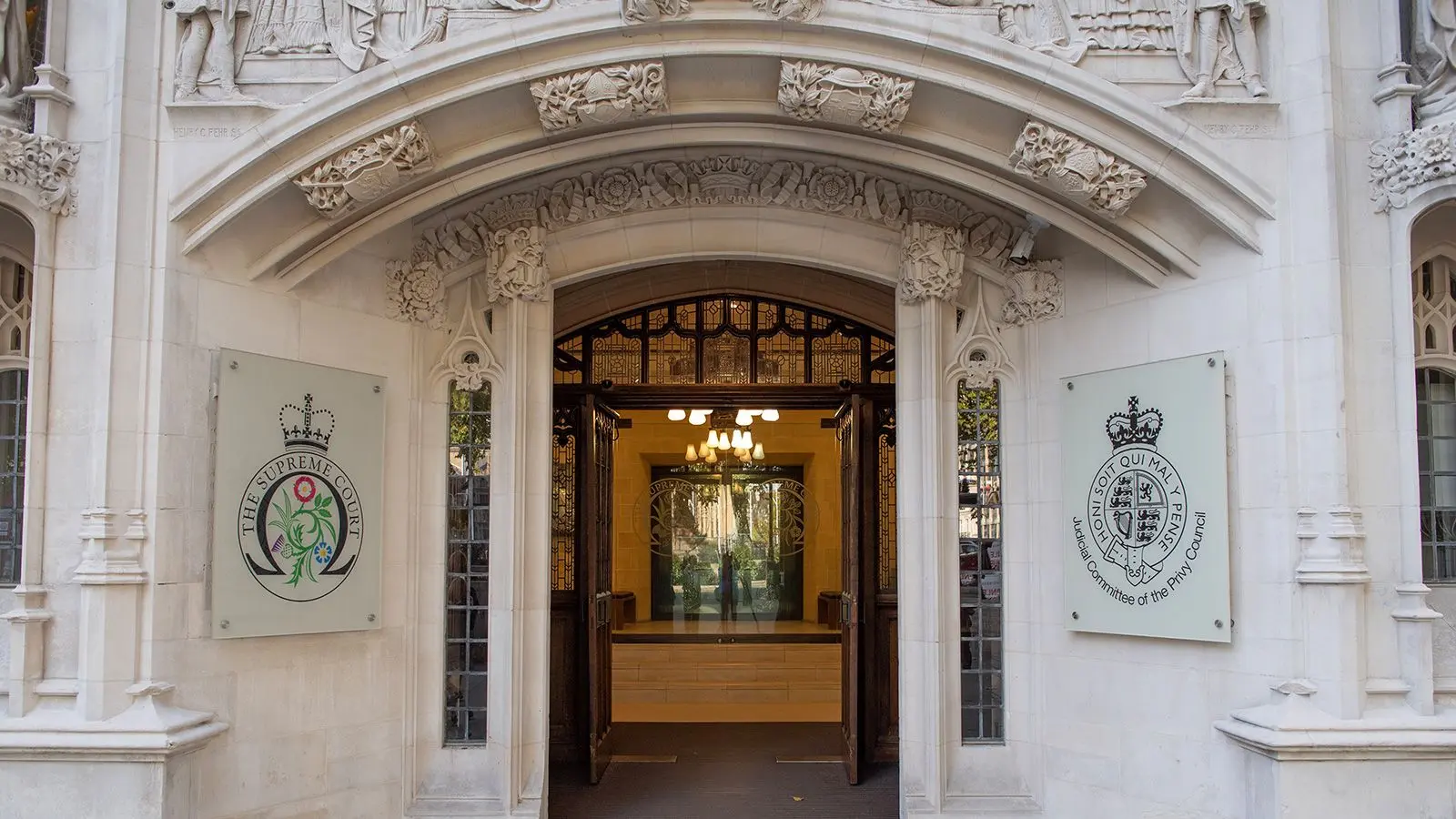
The Supreme Court decision in For Women Scotland v Scottish Ministers has been widely misrepresented.
The Court decided a narrow point of statutory interpretation under the Equality Act 2010. It held that, for the purposes of that Act, the protected characteristic of “sex” refers to biological sex, even where a trans person holds a Gender Recognition Certificate.
That is all.
The Court did not decide that:
- Trans-inclusive services are unlawful.
- Service providers must operate facilities on a biological-sex-only basis.
- Organisations must exclude trans women or trans girls in order to be legally compliant.
The Supreme Court itself was careful to confine its judgment to the specific question before it. It did not purport to rewrite equality law wholesale, nor to dictate how every service provider in the country must now behave. It was also clear that its judgment was not creating an open door that allowed trans people to be discriminated against.
“This interpretation of the Equality Act 2010 does not remove protection from trans people, with or without a Gender Recognition Certificate. Trans people are protected from discrimination on the ground of gender reassignment, and can also invoke provisions against discrimination and harassment.”
What the Equality Act still requires
After For Women Scotland, the Equality Act operates exactly as it did before, subject to that clarified definition.
In particular:
- Service providers are permitted, not required, to offer single-sex services.
- Any exclusion, whether of trans people or of others, must pursue a legitimate aim.
- And crucially, it must be a proportionate means of achieving that aim.
That phrase matters. It is not decorative. It is the core of the law.
Proportionality requires evidence, judgment, and balance. It requires decision-makers to ask:
- What problem are we actually trying to solve?
- Is there evidence of that problem in this context?
- What is the impact of exclusion on those affected?
- Are there less intrusive ways of achieving the same aim?
- Does the policy work in practice, not just in theory?
Courts do not look kindly on blanket rules driven by ideology rather than evidence.
Why consultation is not optional
One of the more troubling features of the current debate is the attempt to short-circuit consultation.
Public bodies are being told, often in threatening letters, that there is only one legally “safe” outcome and that consultation is pointless or even dangerous.
That is wrong.
Consultation is not a weakness. It is part of lawful decision-making. It is how proportionality is assessed in the real world. It is how decision-makers understand lived experience rather than relying on abstract fears.
The recent High Court decision concerning the City of London Corporation’s consultation on access to the Hampstead Heath ponds made this point very clearly. The Court refused to intervene mid-process precisely because it would be wrong to pre-empt a lawful, evidence-based decision before it had been made.
That approach reflects orthodox public law, not some radical departure.
Threat letters are not the same as law
Sex Matters has been particularly active in sending letters before action to organisations, implying that exclusion of trans women and girls is now legally required.
It is not.
Some organisations, including Girlguiding and the Women’s Institute, have chosen to change their policies in response to this pressure. That is their prerogative.
But it should not be confused with legal necessity.
In English law, the loudest voice is not automatically the correct one. Nor is the most aggressive correspondence a substitute for careful legal analysis.
Law is about judgment, not automatism
One of the great misunderstandings in this debate is the idea that the law produces simple, binary answers to complex human situations.
It does not.
Equality law, in particular, is designed to manage competing rights. It assumes that reasonable people, acting in good faith, will sometimes reach different conclusions in different contexts.
Courts expect that. They respect it. They intervene only when decision-makers abandon evidence, ignore impact, or act irrationally.
The suggestion made by Sex Matters and multiple media outlets that there is now only one lawful outcome on trans inclusion is simply wrong.
A final thought
Those of us who care about good governance, equality, and the rule of law should be deeply uneasy about campaigns that seek to govern by intimidation rather than persuasion.
The law does not require panic. It requires thought.
It does not require exclusion by default. It requires justification.
And it does not and must not reward those who shout the loudest, but those who decide most carefully.
That remains true, whatever the headlines say.
This article is a follow-up on my recent post about the outcome of the judicial review application concerning the Hampstead Heath ponds and the City of London Corporation’s consultation about future access policy.
Image credit: UK Supreme Court


 C. E. Lord OBE