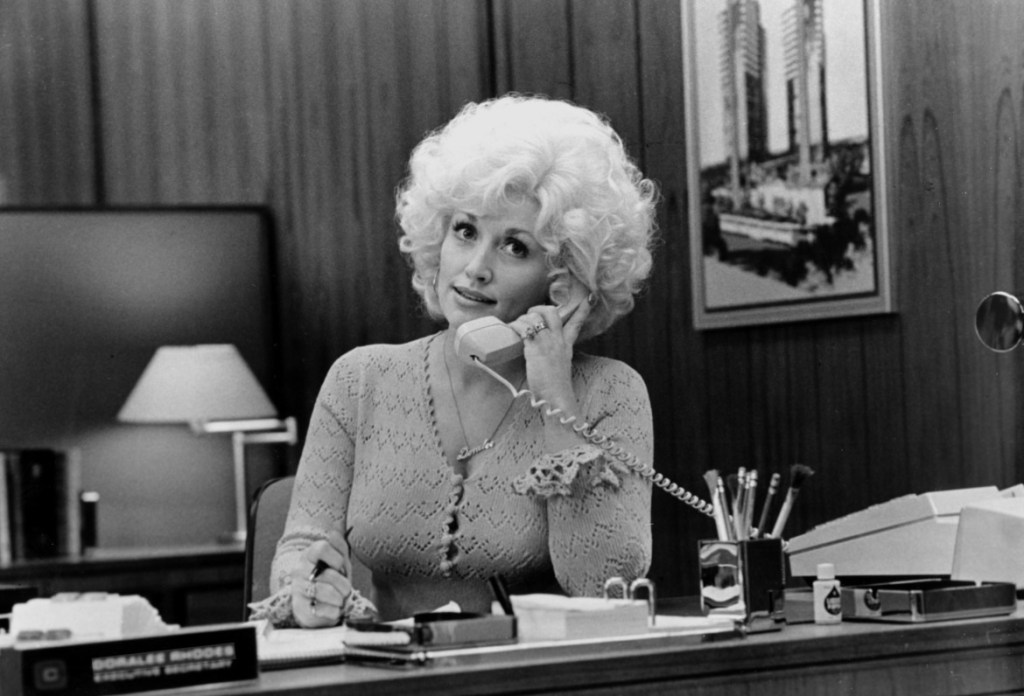
I was deeply saddened yesterday to hear of the death of Dolly Parton at the age of 80. Seeing her film 9 to 5 as a child in the 80s was probably the first time I encountered the singer/songwriter and it was also an early influence on my being a feminist and having a distaste for toxic masculinity.
There will rightly be much written about her extraordinary musical legacy. She was not simply a great performer but a quite remarkable songwriter: Jolene, Here You Come Again, 9 to 5, Islands In The Stream, and, of course, I Will Always Love You are part of the soundtrack of several generations. She wrote thousands of songs and sold more than 100 million records.
But there was much more to Dolly than the rhinestones, wigs, wonderful self-deprecating humour, and unmistakable voice.
She was born one of twelve children into real poverty in the mountains of East Tennessee. From those beginnings she built an extraordinary career and became an exceptionally shrewd businesswoman. She understood the value of her own creativity, retained control of her intellectual property, and built businesses including Dollywood which brought employment and investment back to the community from which she came.
And then she gave back.
Her Imagination Library, inspired in part by her father, who could neither read nor write, grew from giving books to children in her home county into an international literacy programme distributing millions of free books to children, including here in Britain. She funded hospitals, disaster relief and education, and famously gave $1 million towards the research which helped produce the Moderna Covid vaccine.
She was also a feminist icon, whether or not she always chose that label for herself. 9 to 5, both the song and the film, was funny and gloriously catchy, but their politics were unmistakable: women deserved dignity, equality and freedom from harassment and exploitation at work. More fundamentally, Dolly’s own life was a demonstration of female agency. In an industry run overwhelmingly by men, she controlled her career, her image, her songs and, crucially, her money.
And she became a much-loved LGBTQ+ icon. There was something wonderfully subversive about this extravagantly feminine, deeply Christian woman from rural Tennessee being adored by drag queens and queer people around the world. But that affection was not simply camp appreciation. Dolly reciprocated it. She defended gay and transgender people, spoke about the LGBTQ+ members of her own family with love, and did so long before corporate allyship became fashionable or commercially safe.
Politically, she was fascinating. Dolly steadfastly resisted being conscripted into America’s increasingly poisonous party divide. She would not tell people whether she was a Republican or Democrat and was wary of celebrities telling other people how to vote.
Yet she was by no means without politics.
She championed working women. She supported LGBTQ+ equality. She spoke plainly in support of Black Lives Matter. She used enormous personal wealth to improve literacy and healthcare and to help people devastated by natural disasters. Hers was perhaps less a party politics than a politics of human dignity.
And underneath all of this was her Christian faith.
That is perhaps why her death has particularly resonated with me after some of my recent writing about both my politics and my faith.
Dolly grew up in the Pentecostal tradition, sang in church as a child, prayed throughout her life and talked openly about God. But hers was not a Christianity obsessed with deciding who was in and who was out. She said that her faith-based upbringing had taught her to “love and be accepting, and to give more than you receive”.
There is something profoundly Christian about that simplicity.
The Christianity which makes sense to me is not one which demands that we condemn people who are different from ourselves. It is one which asks what we can do for them. It does not require us to choose between faith and LGBTQ+ equality, between faith and feminism, or between faith and social justice. Rather, our faith should be one of the reasons why we care about those things.
And perhaps there is a political philosophy there too.
Dolly Parton believed in enterprise, ambition and individual endeavour. She became fabulously successful and wealthy. But she never forgot the poverty from which she came, and she understood that success created obligations to others. Her answer to a father who could not read was eventually to give hundreds of millions of books to other people’s children.
That combination of enterprise and solidarity, individual freedom and social responsibility, equality and generosity seems to me a pretty good basis for liberal politics.
Dolly Parton was a working-class woman who became a business titan; a country singer who became a queer icon; a glamorous star who became a serious philanthropist; a woman who challenged sexism without allowing anyone else to define her feminism; and a committed Christian who understood faith principally as an instruction to love rather than to judge.
What a life.
And what a rather wonderful example of how to use one. For that, and for so many other reasons, Rest in Power Dolly.


