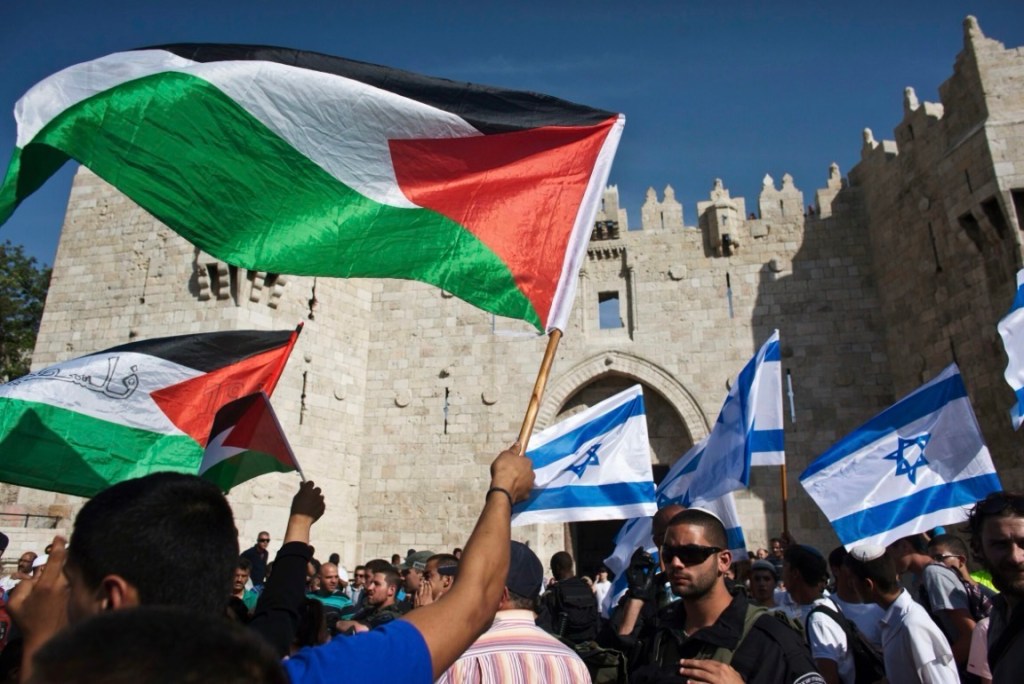
Nine months ago, following the terrorist attack on the Jewish community at Bondi Beach, I wrote about my struggle to make sense of the Israel and Palestine conflict.
I wrote then from a place of grief. I remain there.
Indeed, as I watch what is happening in Gaza and the occupied West Bank, I find myself increasingly devastated, angry, and frightened. Devastated by the suffering of Palestinians. Angry at the conduct of Benjamin Netanyahu and his government. Frightened by what all of this is doing not only to Palestinians and Israelis, but to Jewish communities around the world.
This week the British Government has taken a significant step. Foreign Secretary Ed Miliband has announced measures intended to prohibit the import into Britain of goods produced in illegal Israeli settlements in the occupied West Bank, restrict services supporting the settlements, and enable sanctions against those who facilitate or profit from settlement activity. The Government has also concluded that Israel’s continuing occupation of Palestinian territory is unlawful.
I support that action.
Indeed, I struggle to understand how those of us who continue to believe passionately in a two-state solution could do otherwise. Settlement expansion, forced displacement, and settler violence are not merely abuses suffered by individual Palestinians, appalling though those abuses are. They are steadily destroying the physical possibility of a viable Palestinian state.
There comes a point when expressing “concern” while continuing with business as usual ceases to be an adequate response.
What has particularly troubled me this week, however, has been the argument that taking action against the Israeli Government and illegal settlements somehow places British Jews in greater danger.
I understand the fear behind that argument. Antisemitism in Britain is real. Jewish schools, synagogues, community centres, and ordinary Jewish families require levels of security that ought to shame our society. We have witnessed murderous attacks on Jewish communities around the world. We must never minimise that reality.
But I cannot accept the proposition that British foreign policy towards the Government of Israel must therefore be determined by the possibility that antisemites might retaliate against British Jews.
There are three things here which must remain separate: Jewish people, the State of Israel, and the Government of Israel.
Conflating them is dangerous.
A British Jewish child is no more responsible for the actions of Benjamin Netanyahu than a British Muslim child was responsible for the atrocities committed by Hamas on 7 October 2023. A synagogue in Manchester or London is not an embassy of the Israeli Government. Jewish people in Britain cannot be held collectively responsible for decisions taken by politicians in Jerusalem.
Anyone who attacks or abuses a Jewish person living their ordinary life because they are angry with Israel is an antisemite. Full stop.
But the same distinction has to work in the other direction.
Condemning the policies and actions of the Israeli Government is not antisemitism. Opposing illegal settlements is not antisemitism. Supporting Palestinian human rights is not antisemitism. Believing that Palestinians are entitled to self-determination and a sovereign homeland is not antisemitism.
And applying political, diplomatic, or economic pressure to a government because of its conduct cannot become antisemitic simply because that government happens to govern the world’s only Jewish-majority state.
There are many Israelis making precisely this argument themselves. Prominent former ministers, diplomats, military figures, academics, and Israeli human rights organisations have welcomed Britain’s action against the settlements, as have senior Rabbis in the UK’s progressive synagogue movements. They understand something that I fear is becoming harder to say: defending Israel does not require defending everything done in Israel’s name.
For me, that distinction matters enormously.
My relationship with Jewish people and Judaism goes back most of my life. Some of my formative friendships were with Jewish friends. As a student politician at Essex, I helped replace a Students’ Union policy on Israel and Palestine that I believed had crossed into antisemitism with support for two states. I worked closely with the Union of Jewish Students through my years in student politics. In my twenties, I explored Judaism seriously as another possible route to God. I worked for the British Friends of the Hebrew University and volunteered with the Anglo-Israel Association and the New Israel Fund.
Israel therefore matters to me.
So does Palestine.
I have longstanding friendships with British Muslims. I have supported Palestinian self-determination for decades. I belong to Christians for Palestine and Liberal Democrat Friends of Palestine, just as I belong to Liberal Democrat Friends of Israel. I have marched for peace and a ceasefire.
None of those things feels contradictory to me.
What feels contradictory is asserting the right of Jewish people to national self-determination while denying precisely that right to Palestinians.
I believe in the continued existence of a secure, democratic State of Israel. I also believe in a sovereign, viable State of Palestine. Those convictions are not enemies. They depend upon one another.
And that is why I am so desperately angry with Netanyahu and those around him.
What has been inflicted upon Gaza cannot simply be justified indefinitely by invoking the horrors of 7 October.
Hamas committed an appalling terrorist atrocity. People were murdered, tortured, raped, and kidnapped. Nothing that has happened since can retrospectively diminish the horror of that day.
But neither can 7 October provide perpetual moral immunity for the Israeli Government.
The devastation of Gaza, the deaths of Palestinian civilians, the destruction of homes and essential infrastructure, the displacement of communities, and the continuing assault upon Palestinian life demand moral judgment in their own right. I regard what Netanyahu’s government has done as genocidal. Others will use different legal terminology, and the ultimate legal determinations belong to international courts, but none of us should need to await the final paragraph of a judgment before recognising catastrophic human suffering before our eyes.
The West Bank makes the direction of travel even clearer. Settlements expand. Palestinian communities are displaced. Settler violence grows. Land upon which a future Palestinian state would have to exist is steadily fragmented.
If we genuinely believe in two states, we cannot watch one of those states being made impossible and call our silence neutrality.
That is why the British Government is right to act.
It is also why I was heartened to see Israelis themselves welcoming the measures. Their courage deserves attention because it destroys the lazy binary in which criticism of Netanyahu is presented as hostility to Israel.
Some of my Israeli friends are fundamentally opposed to what their government is doing. I think of them often. They love their country. They fear for its future. Some have spent years campaigning for peace, coexistence, democracy, and Palestinian rights.
Their Israel exists too.
It is an Israel I want to see prevail.
I therefore pray fervently for political change in Israel’s forthcoming election, although I confess that I am frightened by the possibility that the election will produce more of the same. Years of violence, trauma, fear, and political polarisation have pushed Israeli politics in directions which make the prospect of two states seem more distant just when it has never been more necessary.
I also find myself in painful disagreement with some British Jewish friends whom I love and respect.
I understand why Israel matters so profoundly to them. Jewish history makes the yearning for a place of safety not an abstract political theory but something written through generations of persecution, pogrom, expulsion, and ultimately the Shoah. I would never treat that history lightly. I share the conviction that Israel has a right to exist.
But surely that cannot require us to identify the Jewish people, the Israeli people, the Israeli state, and the Netanyahu Government as though they were one indivisible thing.
They are not.
Indeed, I fear that Netanyahu’s government itself encourages precisely this conflation. When legitimate criticism of its conduct is routinely characterised as hostility towards Israel or Jewish people, it becomes harder to distinguish genuine antisemitism from legitimate political criticism.
That does Jewish communities no service.
I want to be careful here because responsibility for antisemitism must always lie with antisemites. Netanyahu does not make someone attack a synagogue, abuse a Jewish student, or threaten a Jewish family. Those who commit such acts are responsible for their own hatred.
But I also believe that the conduct of Netanyahu’s government is contributing to a profoundly dangerous international climate. When a government claims to act in the name of the Jewish state while inflicting terrible suffering upon Palestinians, antisemites seize upon that suffering and grotesquely transfer responsibility from a government to Jewish people everywhere.
That transfer of guilt is itself antisemitic.
The answer cannot be to silence criticism of the Israeli Government. The answer is to insist, relentlessly, upon the distinction.
Netanyahu is not Judaism.
His government is not the Jewish people.
And opposing his government is not opposing Israel.
Perhaps that is why this hurts me so much. I do not want Israel destroyed. I want Israel saved from a political project which I believe is destroying Palestinians, corroding Israeli democracy, isolating the country internationally, and making a lasting peace ever harder to achieve.
And I want Palestine to be free.
Not free instead of Israel. Free alongside Israel.
Two peoples. Two states. Mutual recognition. Security. Sovereignty. Dignity. Borders established by agreement rather than violence. Jerusalem shared rather than possessed. Neither people required to disappear for the other to flourish.
Perhaps that sounds hopelessly idealistic in September 2026.
I cannot accept the alternative.
There must also be space for grief that refuses to ask for someone’s passport before deciding whether their death matters.
I grieve for Israeli families still carrying the trauma of 7 October.
I grieve for Palestinians who have buried their children.
I grieve for people driven from their homes in the West Bank.
I grieve for Jewish communities frightened by the resurgence of an ancient hatred.
I grieve for Muslims facing hatred and suspicion because of crimes they did not commit.
I grieve for my friends in Israel and Palestine who have watched the possibility of peace recede further and further into the distance.
And I grieve because none of this was inevitable.
In my earlier piece I returned to Jesus’s commandment to love our neighbour as ourselves. I find myself returning to it again.
The difficulty with that commandment is that Jesus gives us no exemption for the neighbour whose history complicates our politics. No exemption for the Palestinian neighbour. No exemption for the Jewish neighbour. No exemption for the Muslim neighbour. No exemption for the Israeli neighbour.
Love does not require moral silence. Sometimes love requires us to speak.
So I will continue to condemn antisemitism wherever I encounter it. I will continue to defend the right of Israel to exist. I will continue to oppose those who would erase Israel or drive its Jewish population from the land.
And I will continue to condemn the actions of Benjamin Netanyahu’s government. I will defend the human rights of Palestinians. I will support their right to statehood, and I will oppose an occupation and settlement project which makes that statehood progressively harder to achieve.
None of these commitments cancels out another.
They belong together.
Because, ultimately, peace will not come from deciding which people deserves our compassion.
It will come when we finally accept that both do.
Photo credit: REUTERS


 C. E. Lord OBE